
Take your first step towards the Career of your Dreams,

Discover Indovance Download our Brochure

Edit Template
Edit Template

solar panel system design

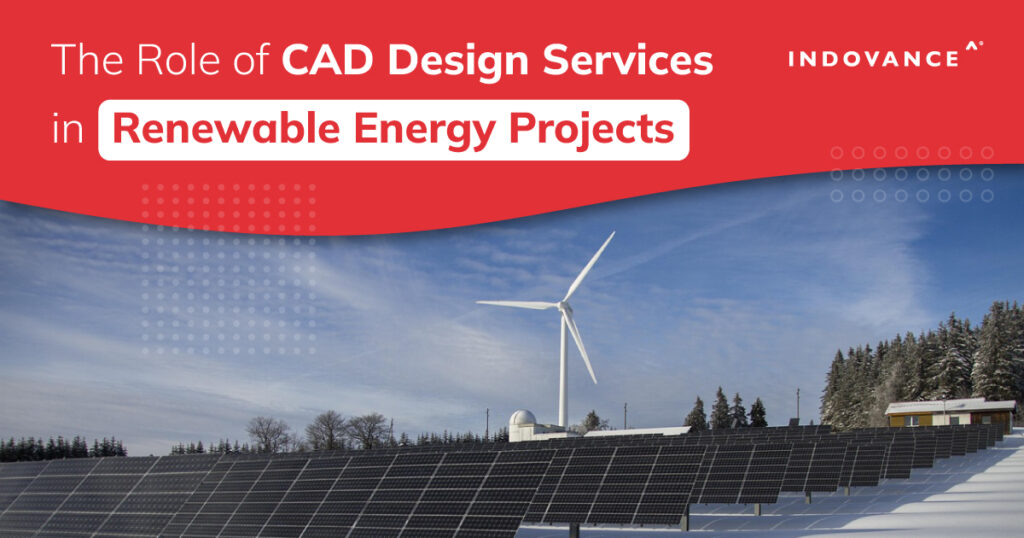
The Role of CAD Design Services in Renewable Energy Projects

Sustainability projects are on the rise globally. We are seeing renewable energy systems being established and businesses leveraging CAD design services for successful implementation. They are helping them in successful execution of renewable energy projects like solar panel design. CAD design and drafting services providers which specialize in solar panel design as part of their renewable energy services. With CAD, accurate drafts or 3D models required for AEC projects can be created. Understanding CAD Design Services in Renewable Energy CAD design services deliver precise and high-quality designs. Using advanced software, professionals can create and simulate different designs and choose the one suits best for the project. For sonal panel systems design, CAD software can be used to create layout of solar panels. It helps in visualization and optimizing the setup before finalization. Entire site can be modeled using CAD which helps in the placement of the solar panels for maximum exposure to sunlight. CAD in Solar Panel System Design Solar panel system design is now a widely used application of CAD in renewable energy work. Designing an efficiency solar panel system involves more than just placing panels on a roof or open field. It requires precise calculations to determine the correct angle, spacing, and orientation of each panel to maximize sunlight absorption for the most energy production. Detailed models of solar installations can be created which simulate real-world conditions. These models can be adjusted or refined to improve efficiency. This ensures that systems operate at peak efficiency, leading to higher energy output and cost savings. Benefits of CAD Drafting Services in Renewable Energy Leveraging CAD drafting services for renewable energy projects offers several benefits: Future Trends and Innovations in CAD for Renewable Energy CAD is continuously evolving. We are getting new technologies and additions within existing software that are enhancing its capabilities. Artificial intelligence (AI) and Machine Learning (ML) are being integrated into CAD. Generative design is enabling the creation of 3D models with just text input. Furthermore, these technologies can analyze large data sets to suggest optimal designs and predict issues early. VR and AR (Virtual Reality and Augmented Reality) are allowing designers get into the project environment and study it more closely, giving them an intuitive understanding of how the design will function after implementation. This is beneficial for complex renewable energy projects where spatial awareness and interaction with the environment are important. CAD is important, and it has taken over as the primary design and drafting method in not just AEC industry, but other industries as well. CAD helps in performance optimization and bringing cost-effectiveness to projects. CAD offers invaluable benefits for solar panel system and other renewable energy projects. As the AEC industry continues to pursue sustainability, advanced CAD technologies will become even more important. It will help streamline operations. Outsourcing Solar Systems Planning and Design If you’re involved in renewable energy projects and are looking for efficiency, leveraging CAD design and drafting services will help you achieve it. By outsourcing to specialized service providers, you get cost effectiveness, the benefit of focusing on core work, and access to professionals who are proficient in CAD software. The right outsourcing partner will understand your requirements and deliver high-quality designs tailored for your needs. Outsourcing is a smart strategy to save on overhead costs since the need for hiring and training an in-house team, setting up infrastructure, and paying salaries is eliminated.
solar panel system design in USA by Indovance Inc.

Innovative Trends in Solar Panel System Design for 2024 and Beyond

Renewable energy solutions are to dominate the global shift towards sustainable energy. Technology growth brings solar panel system design trends into new levels of energy efficiency and high aesthetic appeal for 2024 and beyond. In this blog post, we will discuss upcoming trends in solar panel system design, benefits of solar system design, and more. Innovative technologies are reshaping the solar industry, enhancing efficiency, flexibility, and usability of solar panels, and how advancements in solar panel design will improve energy production and contribute to a more sustainable future. Solar Panel System Design Trends to Look Out For Solar systems are crucial architectural components. They not only generate power efficiently but also seamlessly blend into the design of modern buildings, providing a sustainable energy solution without compromising aesthetics. Let’s look at some of the top leading solar panel system design trends that could shape how we approach renewable energy systems design: Building-Integrated Photovoltaics (BIPV): One of the revolutionary trends in the design of solar panels is BIPV. These systems can be integrated into windows, facades, and roofing materials. This technology is not only functional but also aesthetically pleasing. The benefits associated with BIPV are saving money on material costs, improved design, and maximum energy generation. Transparent Solar Panels: Imagine windows capable of producing electricity as well as allowing natural light to enter a building. Transparent solar panels are paving the way for this future. Such advanced panels are designed to change sunlight into energy without obstructing visibility. They can be used in skyscrapers, homes, and even vehicles. Transparent panels represent a significant breakthrough in solar panel system design, blending energy efficiency with architectural beauty. Flexible Solar Panels: Another trend to watch for is flexible photovoltaic panels. Since they are not rigid, they can be bent, rolled, or bent over wires, which gives them a more flexibility in the possibilities of installation. They ideally suit irregular surfaces that have curved features that are very hard to cover with flat photovoltaic panels like a vehicle’s curved hull or roof. These panels can be packed on backpacks or setup in tent applications. The flexibility of these panels opens fresh avenues for unconventionally using solar power. Solar Skins: Solar skins are advanced methods in the aesthetic finishing of solar panel system design without sacrificing the efficiency aspect. The covers are placed above the solar panels for incorporation into the surrounding environment. This can be in the fashion of an old roof or beautiful designs that reflect artistic appreciations, and in this regard, the solution for those concerned with visual appeal is excellent. Bifacial Solar Panels: Bifacial solar panels will be so much more prominent in 2024 since they can take in the sun’s light from the front and back. Bifacial panels aim to capture the energy from reflected sunlight, usually through the roof or ground, thereby allowing for increased total energy output while being much more efficient. Efficiency will undoubtedly play a more pivotal role in the adoption of solar energy going forward, and bifacial panels will lead that charge. Benefits of Solar Panel Systems Design There are many more benefits of solar systems than environmental advantages. Not only does solar power help to save carbon emissions but also saves one on costs, energy independence, and long-term reliability. Here are some additional benefits from switching to solar energy: Design of Solar Panel System for the Future In 2024 and beyond, we can expect solar energy to be incorporated into daily infrastructure, and one may expect impressive innovative designs and applications developing over the years. Some of the ideas include solar skins that merge panels into a second skin with its environment, solar windows that integrate transparent panels. It will be very critical in designing efficient, aesthetically pleasing, and cost-effective systems through hardware advancements combined with software solutions that include CAD tools for solar panel system design and drafting services with AutoCAD. For renewable energy to gain pervasiveness in homes, businesses, and even personal devices, the industry has set a pace for continued strides and transformation at a rapid pace through the best solar design software. The solar landscape is changing fast. From mere cost-savings advantages through cutting-edge designs that make the integration of the sun into buildings seamless and attractive, there are now evolving styles in solar panel system design, like BIPV and flexible panels. The horizon for solar energy looks bright and full of innovation. Adapting these trends for the coming future into 2024 and beyond will be beneficial for not just the environment but also for how we produce and use energy. As a leading 3D CAD company, Indovance offers expert CAD solutions for solar panel system design, serving residential, commercial, and industrial projects across the USA. Our team delivers precise and efficient designs, including site planning, structural analysis, electrical layouts, and as-built drawings. With a focus on quality and innovation, Indovance helps solar companies streamline processes, reduce costs, and achieve project excellence while staying aligned with industry trends and standards.

Challenges in Solar Panel System Design and How to Overcome Them

Challenges in Solar Panel System Design and How to Overcome Them

The solar energy sector has emerged as one of the prime sections in our quest for sustainable living. Solar panel system design services play an indispensable role in the effective installation and high-performance delivery of renewable energy solar panels. But, designing an efficient solar panel system is not without its challenges. Everything from the detailed approach of panel placement to the complex wiring part can be several challenges that arise in the design phase. This blog looks at some of the top solar panel design challenges and, more importantly, how to overcome them. Challenges and solutions in Solar Panel System Design Panel placement and shading One of the most challenging situations when designing a solar panel system is proper positioning. The use of renewable energy solar panels solely depends on whether they will get good sunlight. Any minor shades from trees, buildings, or other impediments can drastically cut the energy output. Solution: Site assessment and proper positioning This can be overcome with a proper site assessment well in advance. This software for solar panels will simulate the sunlight exposure for the whole year and will then help the designers in choosing the best places for installation. You can make use of CAD Design Services to draw solar panels with precision, so you have an ideal layout such that minimum interference due to shading occurs. Electrical design and wiring complexities Another challenge one might face is faulty wiring within a solar panel system. Poor wiring designs may cause inefficient transportation of energy, power loss, or safety hazards. Solution: CAD tools and professional electrical design Electrical design is a matter of expertise; hence, the employment of experts in designing solar panel systems ensures that wiring is correctly planned and installed. Furthermore, CAD Design Services can visualize complex wiring configurations and help ensure everything is set up efficiently and safely. Regulatory compliance and permitting The solar panel design is not restricted to technical problems. The designers also must go tussling with the local regulations and obtain whatever permits are necessary in advance, which could be time-consuming and complicated. Solution: Expert Consultation and Pre-Planning The more experienced solar panel system design services will help in working on the same with more smooth processing. Their local building codes, zoning law, and permit requirements acquaintance makes it easier to ensure that the project complies with all such regulations. Also, the solar panel software will generate reports and documentation that required for regulatory approvals. System longevity and maintenance A solar panel system is a long-term investment; much of the longevity and maintenance requirements depend on the design phase. Some materials have faster degradation rates, while components like inverters and batteries will need to be replaced periodically. Solution: Quality Components and Maintenance Plans High-quality materials and components hold the key to a long-lasting solar panel system. Designs for ease of maintenance will also help when future maintenance or repairs are needed. Monitoring with software provides early warnings as failures are imminent, allowing repairs and replacement to be timely. Dust One of the major problems with regards to solar panel systems is dust, which normally occurs in places that have dry and dusty weather conditions. Dust that sets on the surface of a solar panel can block sunlight, reducing energy output radically. This is quite pertinent in areas that usually have arid conditions of weather and in the vicinity of construction sites that show higher than normal levels of dust. Solution: Regular Cleaning and Application of Protective Coats This can be overcome by introducing cleaning schedules that regularly remove dust from the panels. Automated cleaning systems for some systems make the process easier, especially for bigger installations. Special protective coatings applied on the surface of the solar panel help in dust repulsion, hence reducing its impact on energy generation. The coatings make it easier for dust to be washed away during rain or light cleaning. Theft Theft of photovoltaic panels and other equipment is one of the major concerns, especially if the construction site or farm is located remotely or without any means of security. Because of the high value of these solar panels and their components, they easily get targeted by potential thieves; this again causes financial loss and delay of projects. When it comes to theft, batteries or inverters altogether disrupt the overall functioning of the solar power system. Solution: Security Systems and Physical Barriers Security systems such as cameras, alarms, and motion detectors will act as a deterrent to theft. Physical barriers such as fencing, and panel mount locking mechanisms protect the system investment from theft even further. Tracking certain key components with GPS or marking equipment with some form of identifier will help recover the stolen goods. Taking these precautions will help protect your investment and ensure continuity of operation. Weather resistance Solar panels need to withstand extreme weather conditions, from raging hot temperatures to extreme snow or gusts of high wind. It becomes quite critical to design a system that can remain up to diversified challenges in diverse weather conditions, especially in areas known for a variety of tough situations. Solution: Durable Mounting and Protective Measures CAD tools even allow designers to emulate such varied weather conditions on the system and choose appropriate materials and mounting structures for those challenges. Addition of wind-resistant mounting and snow guards adds strength to the system. Designing a solar panel system is a crucial but complex process that is essentially required for any successfully implemented renewable energy project. The professional service in designing solar panel systems can only cater to fulfilling the needs of any business or individual willing to deploy renewable energy solar panels toward optimal performance for a long period. The fact remains that solar panel design challenges are only overcome when you combine technical talents, advanced software, and creative problem-solving. Address these issues head-on in your design so that your system is both efficient and long-lasting, which can help you make the most of renewable energy solar panels and contribute towards a greener future.

© 2024 Indovance. All Rights Reserved.

Scroll to Top